SEO: The Technical and Content Foundation
Improve crawlability, indexing, website structure and search-focused content so important pages can be discovered and evaluated by traditional search engines.

Search is becoming more conversational. People ask AI-powered tools to compare providers, explain complex choices and point them toward credible sources. BlueBit helps businesses make their websites clearer, more accessible and easier to evaluate across these evolving discovery experiences. Our approach combines technical SEO, helpful content and trustworthy business information—not promises of guaranteed AI recommendations.
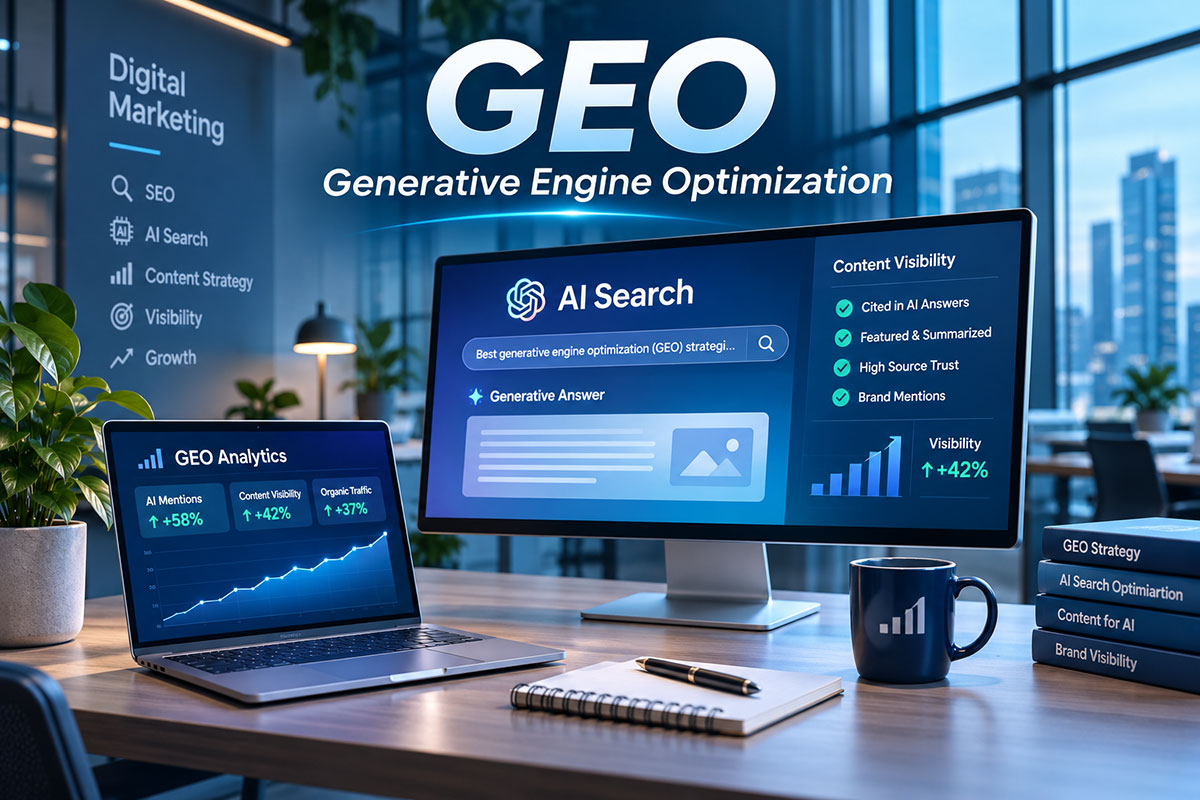
Effective search visibility begins with understanding how traditional search, generative responses and direct answers fit into the same customer journey.
Improve crawlability, indexing, website structure and search-focused content so important pages can be discovered and evaluated by traditional search engines.
Make your expertise, offering and supporting evidence easy to understand, while monitoring how your brand appears in AI-generated discovery experiences.
Structure accurate answers, comparisons and practical explanations around the questions prospects ask before choosing a product, provider or service.
We focus on changes that can be reviewed and implemented, with deliverables tailored to your website, industry and sales process.
Test commercially relevant questions, review cited sources where available, and document opportunities to improve how your business is described and discovered.
Clarify service scope, project processes, decision criteria and buyer objections across key service, category and product pages.
Add specific capabilities, verifiable details, use cases and meaningful comparisons instead of generic marketing claims.
Review robots directives, important URLs, redirects, visible page content and relevant crawl restrictions across search environments.
Align business identity, service descriptions, contact details and credible proof of expertise across your website's key pages.
Track selected prompts, observed citations, organic search trends and qualified enquiries, then refine pages based on evidence rather than speculation.
Generative engine optimization starts with the questions your prospective customers actually ask. A buyer researching a web development agency might compare technical expertise, delivery processes, maintenance commitments and relevant projects. Pages filled with slogans provide little support for that decision. A useful starting point is to turn vague claims into clear explanations, supported by SEO content writing that addresses real needs.
AI search optimization does not replace technical SEO. Important pages still need discoverable links, indexable content, a coherent website structure and accurate canonical signals. Structured data should describe what users can actually see on the page. For Google AI search features, an invented special schema or compulsory AI-specific file is not a shortcut; solid SEO services remain the foundation.
We also examine longer, more specific questions. A procurement manager may ask about supplier verification, implementation timelines, compatibility or after-sales support. In B2B industries, clearly documented expertise often matters more than a high volume of generic articles. For online stores, product attributes, availability, selection guidance and useful comparisons connect GEO with eCommerce SEO.
GEO service pricing depends on the size of the website, existing content quality, technical constraints, number of priority pages and monitoring requirements. Some businesses need targeted improvements to a handful of commercial pages. Others need broader content architecture, brand evidence and reporting work. We define the scope after examining the current website rather than promoting a one-size-fits-all package.
Measuring GEO requires context. An isolated screenshot showing a brand name in an AI response does not prove lasting visibility or commercial value. We assess observed mentions or citations where accessible, relevant site visits, engagement and actual enquiries. Google Search Console provides useful search performance data, but individual AI answers are not consistently attributable through a single universal report. Our portfolio can also help prospective clients evaluate our wider implementation experience.
For WordPress and WooCommerce sites, implementation may involve improving the structure of service pages, clarifying product specifications, resolving crawl restrictions or adding useful internal links. Technical changes should support genuinely better information; simply installing another plugin is not a dependable GEO strategy. The goal is a website that communicates clearly to both customers and systems evaluating its content.
For international B2B companies, trust signals deserve special attention. A clear company profile, genuine project examples, documented processes, realistic service locations and consistent contact information help a prospective buyer verify your offer. When these details are scattered or inconsistent, even strong technical SEO cannot compensate for unclear commercial information.
Content quality also depends on maintenance. Outdated delivery terms, unavailable products, old service lists and unsupported claims can create confusion for people researching options. We identify information that changes frequently and recommend an editorial update process so pages remain useful after the initial optimization.
AI-generated answers can differ between users, regions, prompts and points in time. Instead of treating one result as a fixed ranking, we review a consistent set of relevant questions over time and record what can actually be observed. This makes it easier to spot recurring gaps in your content while avoiding unsupported claims about performance.
GEO works best as part of an integrated website strategy: a reliable technical foundation, useful pages built around customer intent, credible business details and measurable conversion paths. BlueBit can combine these priorities with WordPress SEO and website conversion optimization to make improvements commercially relevant.
Consider a purchasing manager asking an AI-powered assistant how to select an electronics component supplier. A page that lists only a product name offers little context. A page with accurate specifications, sourcing conditions, lead times and real application details helps the buyer assess the supplier more effectively.
We identify missing information and strengthen the pages that matter most. The priority is to communicate genuine capabilities through specific, verifiable explanations—never fabricated testimonials, invented citations or artificial performance metrics.

Reporting should distinguish directly observed results from assumptions. We do not present invented citation counts or guaranteed growth percentages.
Where access permits, we compare relevant data sources and record the context in which each observation was made.
No agency can guarantee permanent inclusion in ChatGPT, a fixed position in AI-generated responses, or increased sales from a single technical change. We focus on measurable improvements to content quality, accessibility and trustworthiness.
Read Google's Official Guidance on AI Search →Understand your offer, target audience, priority questions and existing search visibility.
Select service, category, product and guidance pages relevant to purchasing decisions.
Resolve practical barriers, strengthen evidence and improve connections between important pages.
Review sampled AI responses, available search data and the quality of incoming enquiries.
Each industry has different buyer questions and different ways to demonstrate trust. Your content strategy should reflect those differences.
Communicate expertise, relevant projects, engagement models and service boundaries so prospective clients can compare providers confidently.
Improve product descriptions, buying guides, category information and availability details for comparison-driven shopping questions.
Strengthen source attribution, expert context and review processes for content that needs accuracy and frequent updates.
Answers to common questions about generative search optimization, its limitations and how it complements SEO.
GEO focuses on information clarity, credible evidence and visibility in generative search experiences. It does not replace SEO: useful content, crawl accessibility and an effective website structure remain essential.
No. Results can vary by prompt, user and platform. We can improve content quality, access and the consistency of your business information, but no provider controls every AI-generated answer.
No. Google does not require a dedicated AI file or special schema to qualify for its AI search features. Follow its established search guidance and ensure important content is accessible and useful.
Yes. Accurate product attributes, meaningful comparisons, helpful selection guides and clear purchase terms can improve information quality and support buyers researching products through AI tools.
We assess the number of priority pages, existing content quality, technical requirements, amount of content work and the monitoring scope before preparing a project-specific proposal.
Tell us about your website and business goals. We will help assess whether GEO is relevant and which improvements deserve attention first.